

What Is Ethical Pricing? A Values-Led Guide for Conscious Creatives & Small Businesses
Looking for the practical how-to? Read How to Set Ethical Prices for Your Creative Business →
If you’ve ever felt conflicted about how to price your work, too high, too low, too “much,” too “little”, you’re not alone. Pricing is one of the most emotionally charged aspects of running a creative or service-based business. Most of us weren’t taught how to price ethically. We were taught how to price capitalistically: with strategies rooted in scarcity, competition, and maximizing profit at all costs.
But if you’re here, reading this, you’re likely craving something different:
A way to price your work that feels honest, fair, transparent, and aligned with your values.
A way to make a living without replicating the systems that harmed you.
A way to serve your community without burning out or abandoning yourself.
This is where ethical pricing comes in.
Ethical pricing isn’t a tactic.
It’s not a formula.
It’s not “charge your worth” platitudes.
Ethical pricing is a practice, one rooted in anti-capitalist thinking, community care, and sustainable business design.
Let’s dig in.
What is Ethical Pricing?
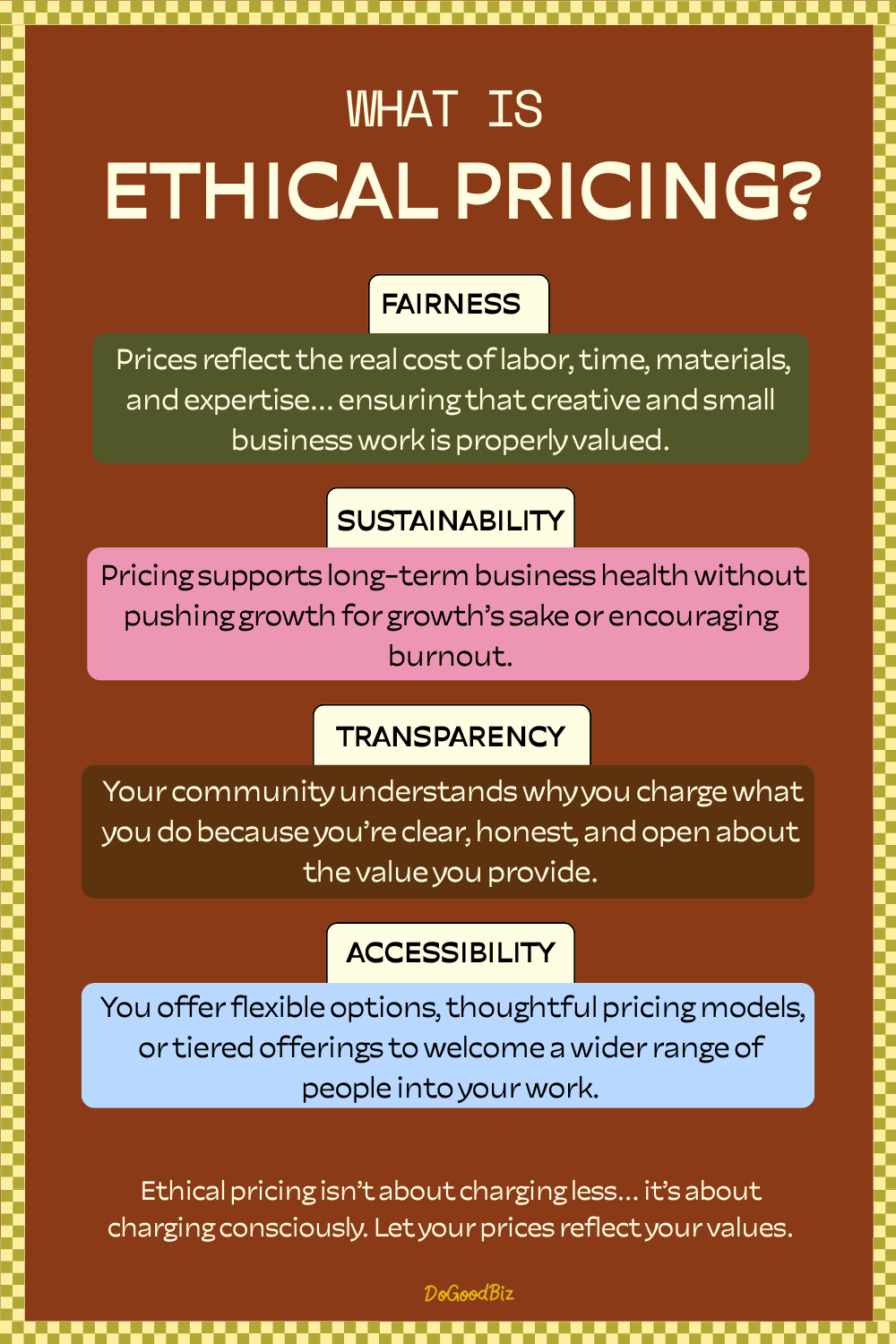
Ethical pricing is an approach to pricing your work that centers integrity, accessibility, consent, transparency, and sustainability for you, your clients, and your community.
It asks you to consider:
your real needs
your capacity
your lived experiences
the realities of your audience
the broader social + economic context
the impact of your pricing on people and the planet
the sustainability of your business over time
Ethical pricing is not about sacrificing yourself to be “affordable.” It’s also not about charging aggressively because someone on the internet said you “should.” It’s about creating a pricing model that honors everyone involved.
Why Ethical Pricing Matters (Especially for Creatives & Small Businesses)
Pricing sits at the intersection of:
money wounds
identity
privilege
systemic inequity
self-worth
capacity
cultural narratives
community care
When we default to standard capitalist pricing logic, we unintentionally replicate harm:
pressure-based “invest in yourself” sales culture
inflated pricing models with little transparency
scarcity tactics designed to manipulate behavior
confusing payment structures
shaming people for not being able to afford support
valuing profit over people
Ethical pricing interrupts these patterns. It asks us to slow down and consider: How do we exchange value in a way that honors humanity, not just economics?
This is fundamental to an anti-capitalist way of doing business.

The 5 Pillars of Ethical Pricing
These pillars reflect your values and help anchor your pricing decisions in clarity rather than pressure.
1. Transparency
Clear, honest, publicly available pricing helps rebuild trust in an industry full of gatekeeping and manipulation.
Transparency looks like:
explaining what’s included
naming what the price covers
sharing your reasoning
offering context when raising prices
removing bait-and-switch tactics
Transparency doesn’t mean oversharing your personal finances. It means communicating with clarity and respect.
2. Sustainability (for you)
If your pricing model doesn’t support your life, your rest, or your long-term capacity, it is not ethical, because it will lead to depletion, burnout, or collapse.
Sustainable pricing considers:
your energy
your labor
your real cost of doing business
the hidden labor you perform
your sensory + emotional bandwidth
your cost of living
your time
You are part of your ecosystem. You must be resourced.
3. Accessibility (for your audience)
Accessibility doesn’t mean “make everything cheap.”
It means:
creating tiered access points
being honest about who each offer is designed for
reducing unnecessary barriers
providing clear pathways into your work
offering community care options where possible
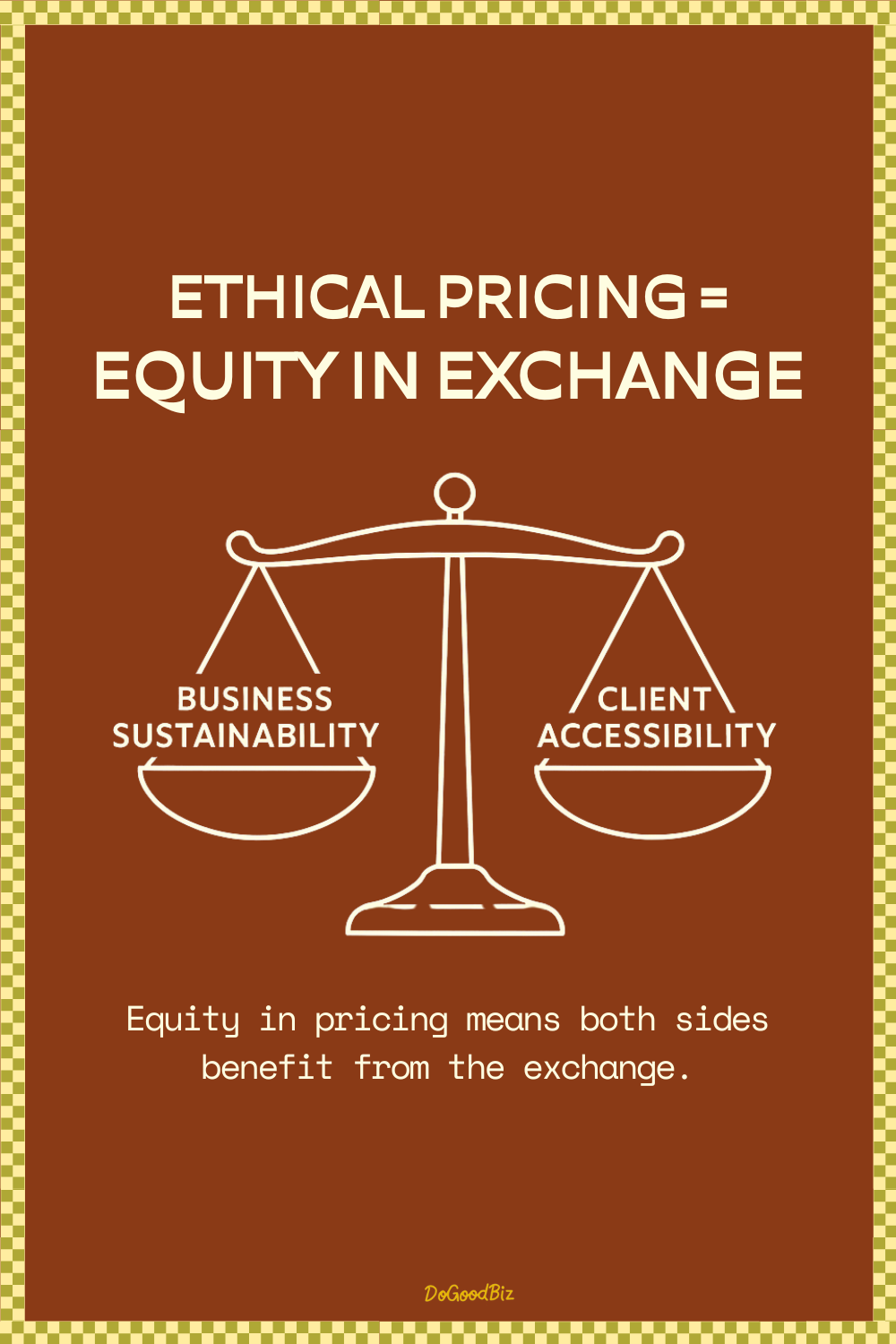
Accessibility is not the opposite of sustainability. They must coexist.
4. Reciprocity
Ethical pricing recognizes that value flows both ways and that relationships, not transactions, sustain a business over time.
Reciprocity can look like:
community pricing
sliding scale tiers
pay-what-you-can windows
value-based pricing structures
offering additional low-cost resources
respecting boundaries around your time and energy
It’s not about undercharging. It’s about cultivating exchange.
5. Integrity
Integrity means refusing to use tactics that rely on fear, shame, or coercion.
Integrity-based pricing avoids:
countdown timers as pressure
fabricated scarcity
manipulative “pain point” exploitation
shaming people for not investing
predatory pricing models
charging high-ticket prices with low-ticket delivery
Ethical pricing is not about positioning. It’s about honesty.
The Problem With “Charge Your Worth” Culture
Let’s be clear:
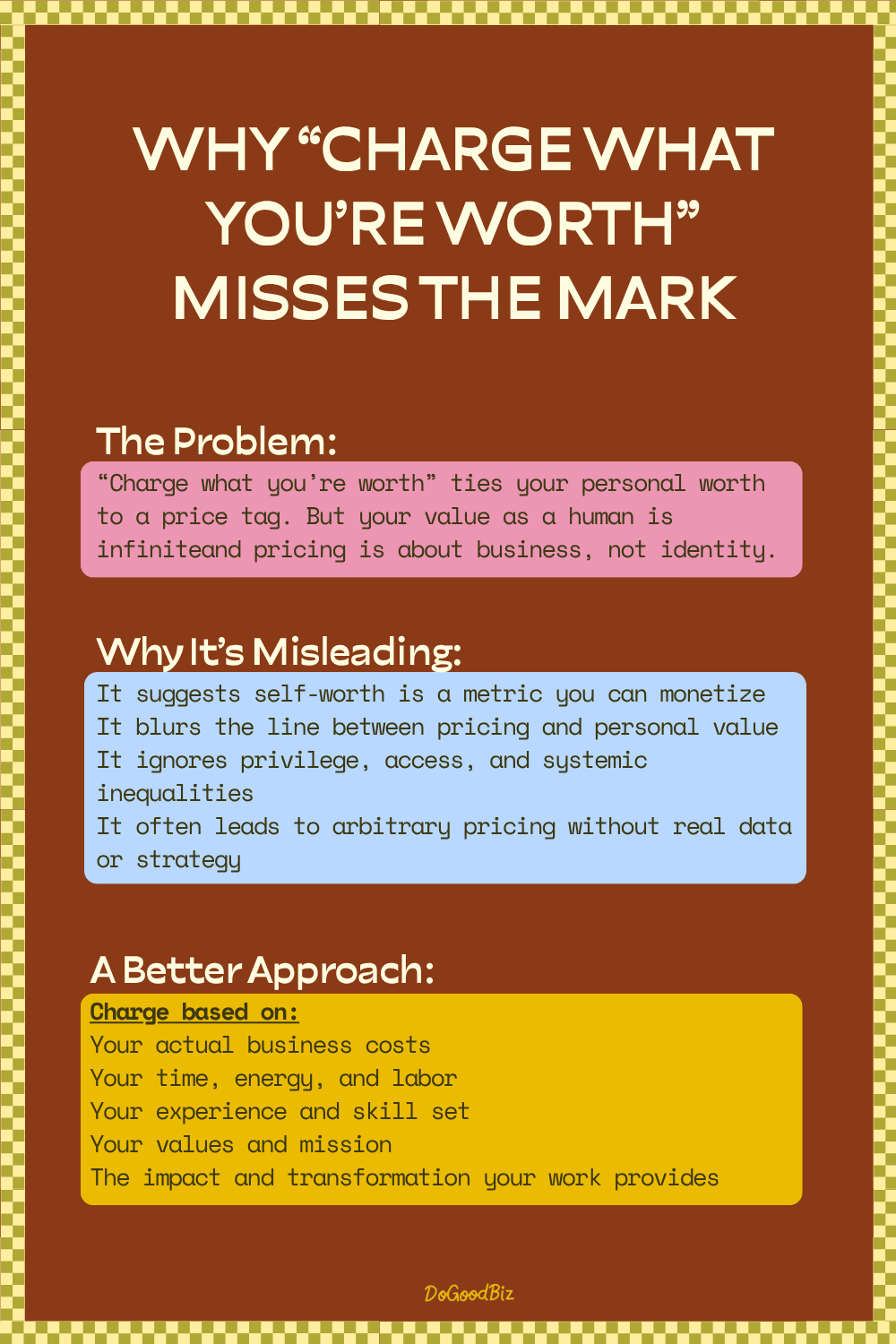
Your worth is not financial.
Your worth cannot be priced.
“Charge your worth” is a capitalist rebrand of a deeper wound around value.
The truth:
You charge for the labor involved, not your inherent worth.
Ethical pricing separates:
self-worth
fromfinancial compensation
This is liberating for creatives who have been made to tie their identity to their output.
A Nature-Based Metaphor: Pricing as Soil Health
Pricing is not the fruit; it’s the soil.
Your prices shape:
the health of your business
the resources available to you
the stability of your ecosystem
your ability to rest, create, and innovate
your resilience during seasonal shifts
Healthy soil = healthy growth.
Depleted soil = burnout.
Over-fertilized soil = extraction.
Pricing with care supports long-term regeneration, not short-term gains.
Ethical Pricing Isn’t About Perfection, It’s About Care
Ethical pricing is not a single decision.
It’s a relationship.
A practice.
A steady commitment to building a business that honors your values, your audience, and your humanity.
It’s how we build economies of care instead of economies of extraction.
It’s how we create work that sustains us instead of drains us.
It’s how we contribute to a future where business can be a force for good.
If you’re building a business that wants to exist outside of the harm of capitalism, ethical pricing is one of the most powerful places to start.
How to Create Your Ethical Pricing Model (Practical Steps)
Here’s a framework that supports both sustainability and accessibility:
1. Identify Your Capacity + Real Costs
Consider:
hours per client/project
emotional labor
sensory + energetic labor
admin + backend time
studio costs
cost of living
rest needs
Your baseline pricing must support your life, not just your business.
2. Define Who Each Offer Is For
Not every offering needs to be available to everyone.
Clarify:
who each offer serves
what level of support it requires
which tier it belongs to (low, mid, high)
When you identify the audience clearly, both accessibility and sustainability fall into place.
3. Build Tiered Access Points
For example:
free content (blog, Substack, Pinterest)
low-cost resources (downloads, templates)
mid-tier offerings (workshops, small products)
high-touch offers (custom design, consulting)
This allows people to enter your ecosystem in a way that feels safe, while supporting your livelihood.
4. Communicate Transparently
Share:
what’s included
the transformation or outcome
the labor involved
the timeline
your boundaries
This builds trust and reduces confusion.
5. Revisit Pricing Seasonally
Ethical pricing evolves.
Review:
sustainability
accessibility
energy
needs
economic changes
cost of living
creative capacity
Pricing is not static, it’s cyclical.
Building a business rooted in ethics from the ground up?
This is the work we love most.
We can help you build:
value-based pricing structures
ethical sales systems
sustainable business models
sliding-scale frameworks
regenerative offers
pricing that supports your creative ecosystem
From brand identity to marketing strategy, DoGoodBiz Studio helps conscious creatives build systems that honor their values and their livelihood. Explore our services or reach out directly to learn about how we can customize a service package that specifically reflects your goals and needs.
Until next time…
Natalie Brite | DoGoodBiz Studio
Read next:
What Is a Community-Based Business Model? — Structures built around shared value and reciprocity rather than profit extraction.
Why Creative Ecosystems Matter More Than Personal Brands — Designing a business that regenerates rather than depletes — the same logic that underlies ethical pricing.
Stop Saying Ethical and Meaning Nothing By It — The harder conversation about what backing your values with actual practice looks like.
