

Value-First Marketing: Ethical, Sustainable Content Strategy
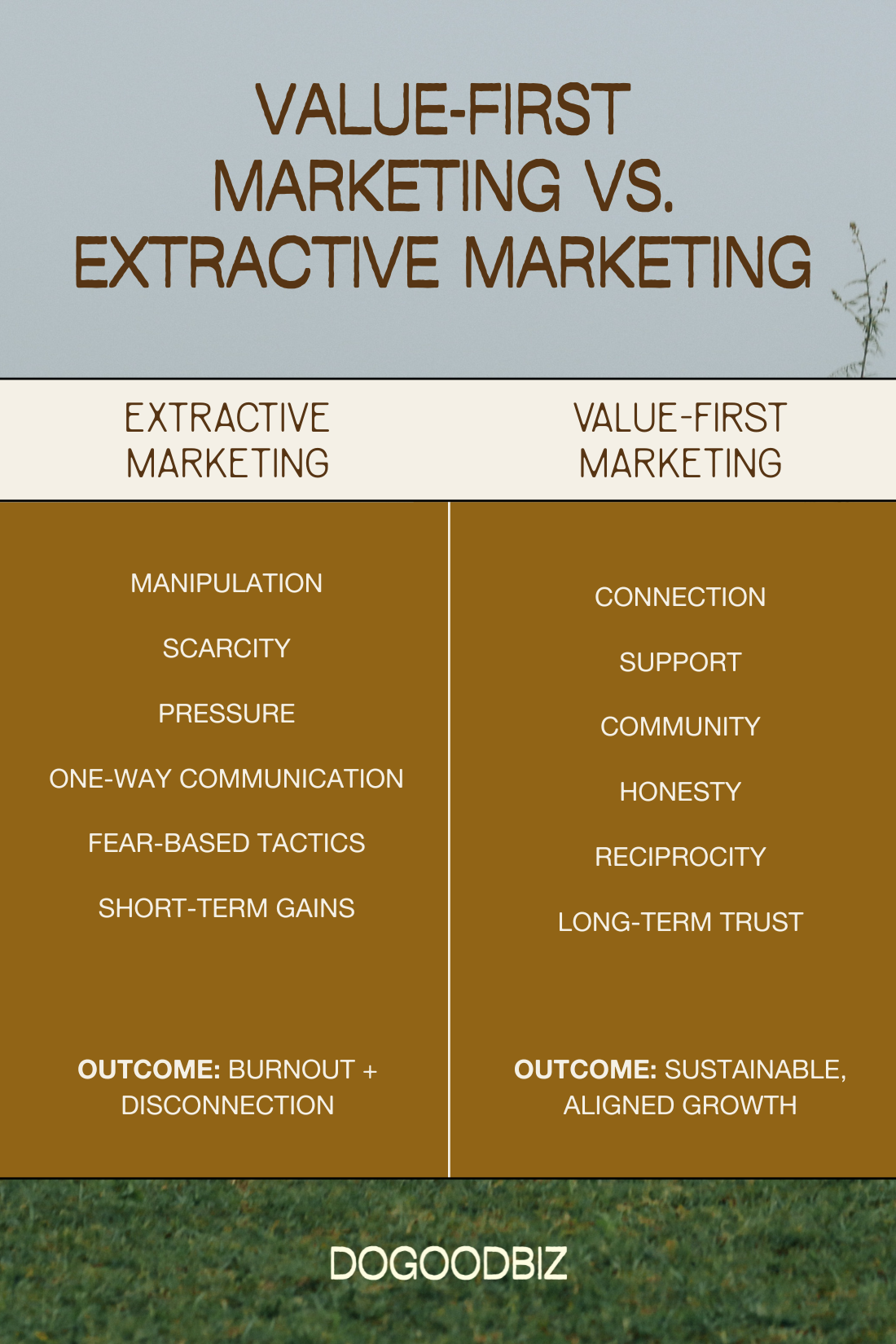
In a digital world where every platform is shouting for attention, “marketing” has slowly drifted far from its original purpose. It has become synonymous with pressure, manipulation, algorithm-chasing, and endless demands for visibility. No wonder so many creatives and small business owners feel exhausted by it.
But marketing was never meant to be a performance.
At its core, marketing is the process of creating, communicating, and delivering value to serve a community.
Value-first marketing is a return to that truth. It’s not a tactic, hack, or strategy to “game the algorithm.” It’s a philosophy… one rooted in generosity, integrity, and connection. At DoGoodBiz Studio, value-first marketing isn’t something we do. It’s the way we exist.
Before I ever had the language for ethical marketing or conscious strategy, I was intuitively drawn to sharing content that supported people. I didn’t create to grow a following; I created to offer something useful, grounding, or encouraging to someone who might need it.
That’s the heart of value-first marketing. And it’s also the foundation of sustainable, ecosystem-based marketing, a direction that allows your business to grow without burnout, extraction, or self-abandonment.
What Is Value-First Marketing?
Value-first marketing is a relationship-centered approach that prioritizes supporting your audience before selling to them. The goal is not quick conversions; it’s trust.
Value-first marketing shifts your orientation from:
How do I get people to buy?” to How can I genuinely help, support, or empower someone today?”
This approach centers:
usefulness
honesty
transparency
reciprocity
education
community
accessibility
long-term trust
Instead of trying to “convince” your audience to choose you, you become the person or brand they naturally turn to because you’ve demonstrated care, clarity, and integrity through consistent value. Value-first marketing pairs naturally with analog marketing, as both prioritize depth of connection over volume of output.
Value vs. “Value”: Why It Matters
Not everything that looks valuable is truly valuable. Many business owners share content that appears educational but still reinforces harmful narratives, scarcity mindsets, shame-based messaging, or manipulative tactics. So value-first marketing begins with a deeper reflection:
1. What does YOUR brand believe is valuable?
Is it empowerment? Clarity? Creativity? Liberation? Honesty?
2. What does YOUR audience genuinely find valuable?
What do they care about?
What do they struggle with?
What do they want to understand, feel, create, or change?
3. Where do those two definitions meet?
That’s the sweet spot: aligned value.
But value alone isn’t enough because value can be exploited without intentionality.
This is where responsible marketing comes in.
What Is Responsible Marketing? (And Why It’s Essential)
Responsible marketing is the ethical backbone of value-first marketing. It’s the practice of honoring your community, your impact, and your integrity in every piece of content you create.
Signs you’re practicing responsible marketing:
✔ You communicate honestly (no inflated promises, no manufactured urgency).
✔ You avoid manipulative tactics, shame-based messaging, or false scarcity.
✔ You understand your audience’s lived realities, identities, and needs.
✔ You consider accessibility and inclusion in your content.
✔ You speak to possibilities instead of preying on pain points.
✔ You take accountability for the influence your brand holds.
✔ You think long-term (relationship > conversion).
Responsible marketing is slower. But it builds something deeper: trust that lasts.

How to Create Value-First Content (Without Burnout)
One of the biggest misunderstandings about value-first marketing is the idea that it requires giving away all your expertise for free.
It doesn't. Value is not volume. Value is resonance. Value is intention.
Here are the five primary forms of value-forward content:
1. Educational Guides & How-Tos
Teach something your community actually wants to understand or practice.
Examples:
tutorials
how-to blog posts
step-by-step carousels
behind-the-scenes process breakdowns
Educational content works especially well because it:
positions you as trustworthy
reduces confusion for the audience
moves people closer to working with you (organically)
2. Storytelling, Case Studies & Client Wins
Real stories are high-value content.
People want to see themselves in someone else’s transformation.
Case studies show:
what’s possible
how you help
your process
your real impact
This is grounded, ethical social proof, not inflated marketing claims.
3. Interactive Tools & Resources
These support your community’s agency and self-trust.
Examples:
checklists
worksheets
calculators
templates
planning tools
quizzes
decision trees
Resources empower your audience to take action, not just consume.
4. Live Events, Community Touchpoints & Conversations
Spaces of connection create the strongest value.
Some examples:
free workshops
Q&A sessions
community circles
subscriber chats
co-working sessions
open studio days
These deepen trust and build community, not just followers.
5. Thought Leadership & Perspective Sharing
This is where your voice becomes valuable.
Share your:
observations
philosophy
lived experience
critiques
reflections
frameworks
beliefs
worldview
Thought leadership is high-value because it’s unique. It cannot be replicated or commodified.
Why Value-First Marketing Fuels Sustainable Growth
Value-first marketing doesn’t generate overnight results; it generates lasting ones.
It builds a marketing ecosystem that grows through:
🌱 trust
🌱 alignment
🌱 consistency
🌱 relationship
🌱 community
🌱 authenticity
Long-term benefits include:
higher engagement
stronger referrals
more meaningful inquiries
a community that shares your work
less reliance on algorithms
more joy and clarity in your content creation
a brand rooted in integrity
This is the foundation of sustainable, ethical growth. This shift from funnel to ecosystem is exactly what we explore in Why Creative Ecosystems Matter More Than Personal Brands, the nature-inspired alternative to extraction-based marketing.
Why Value-First Marketing Fits Perfectly Into Ecosystem Thinking
Value-first marketing is not linear. It’s regenerative, just like nature.
Every piece of high-value content becomes:
➡ a seed
➡ that takes root
➡ that grows trust
➡ that nourishes your audience
➡ that naturally leads people deeper into your world
This mirrors your broader Creative Ecosystem Framework, where:
Roots = values
Soil = trust
Sunlight = visibility
Water = conversion
Pollinators = community & engagement
Bloom = offerings
Value-first marketing lives in every layer of your ecosystem. For the broader strategic picture, Ethical Marketing Is an Ecosystem, Not a Funnel maps out what a fully values-rooted marketing approach looks like in practice.


Ethical, Value-First Marketing Is a Practice, Not a Trick
Value-first marketing is not about appearing ethical. It’s about being ethical. It’s a commitment to truth, honesty, reciprocity, and service — even when it requires slowing down, rethinking your approach, or releasing strategies that no longer align.
It’s how we build a regenerative brand.
It’s how we build community.
It’s how we build trust without extraction.
It’s how we grow without losing ourselves.
And honestly? It’s what makes marketing feel good again.
Want Support Creating a Value-First Marketing Ecosystem?
We can help you map out a sustainable, aligned, ethical marketing system that places value, integrity, and regeneration at the center. If you want ongoing strategic support to build a marketing ecosystem rooted in these principles, Tend & Grow is our ongoing creative partnership for values-led businesses ready to stop going it alone.
Let’s build a marketing ecosystem that supports your creativity, not drains it. Lead with value. Build with trust. Grow sustainably.
Curious about how to run your marketing department as a team of one? Reach our article on the topic!
Until next time…
Natalie Brite | DoGoodBiz Studio
