

Ethical Marketing Is an Ecosystem, Not a Funnel
How to Practice Conscious, Human-First Marketing That Sustains People and Planet
Ethical marketing is not a trend. It’s a response.
A response to burnout. To manipulation dressed up as strategy. To growth models that extract attention, energy, and trust without giving much back.
At DoGoodBiz Studio, we think of ethical marketing less as a checklist of tactics and more as a living ecosystem, one that prioritizes relationships over reach, stewardship over scale, and long-term care over short-term wins. This guide is an invitation to rethink how marketing works, why it matters, and how to build marketing systems that actually sustain the people inside them.
What Ethical Marketing Really Means
Ethical marketing is the practice of sharing your work in ways that are honest, transparent, inclusive, and accountable… not just to your bottom line, but to the people and communities you serve.
Where conventional marketing often asks:
How do we convert more people, faster?
Ethical marketing asks:
How do we show up in ways that build trust, reduce harm, and support long-term relationships?
It centers care, consent, and clarity. It values integrity over optimization. And it understands that marketing is not neutral; it shapes culture, expectations, and behavior.
Ethical marketing is not about doing less marketing. It’s about doing better marketing.
Why Ethical Marketing Matters Now
We’re living in a moment of deep fatigue with traditional marketing models.
Audiences are more discerning. Trust is harder to earn. And people are increasingly aware of how extractive systems show up in their daily lives, including in the way brands communicate.
Ethical marketing matters because:
Trust is fragile
People want to know who they’re supporting and why. Transparency builds credibility over time.Relationships outlast campaigns
Sustainable businesses are built on loyalty, reciprocity, and shared values, not constant urgency.People and planet are not resources
Ethical marketing considers the long-term impact of messaging, consumption, and growth.
In short, ethical marketing recognizes that how you grow matters just as much as if you grow.
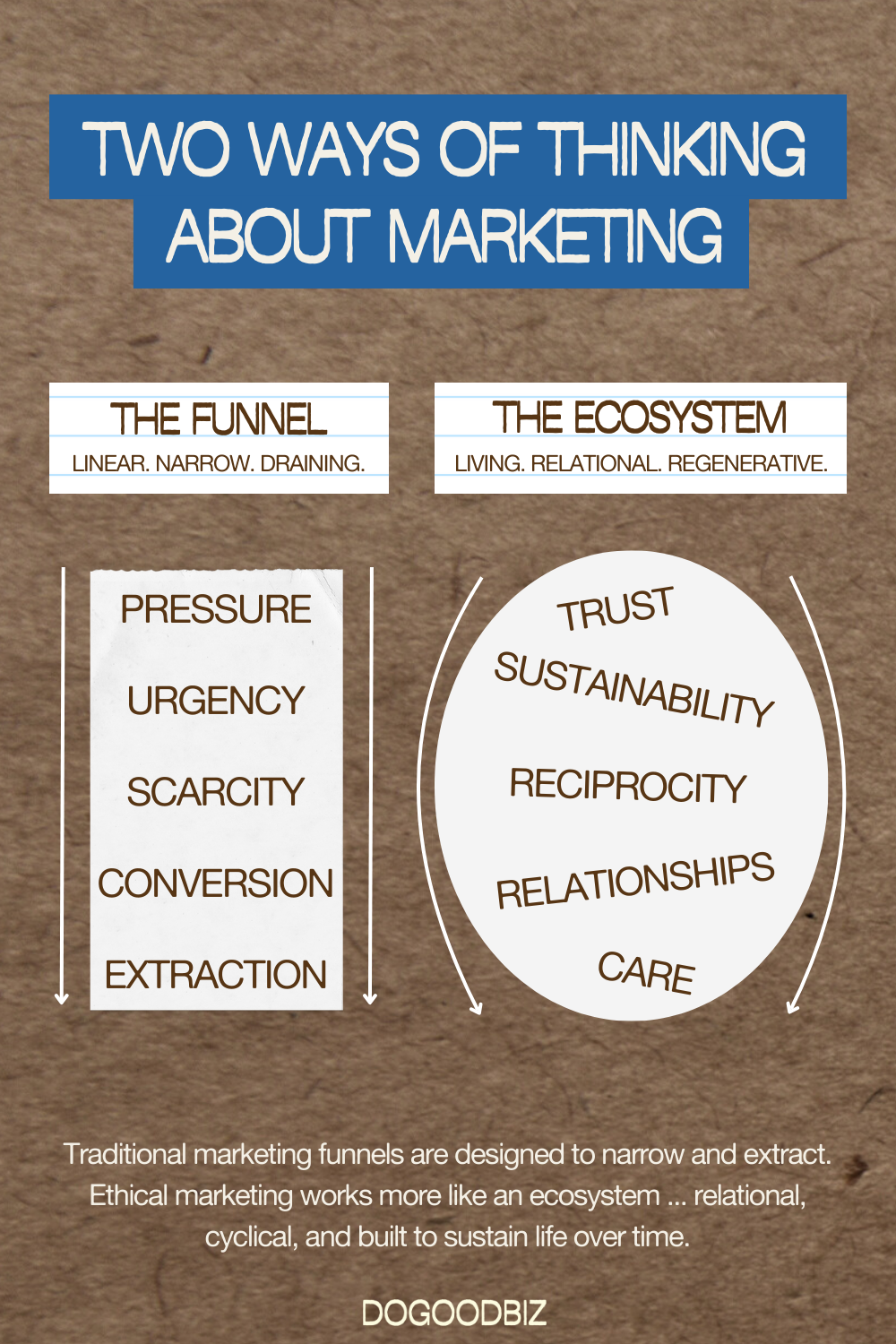
From Funnels to Ecosystems
One of the biggest shifts ethical marketing requires is moving away from funnel-based thinking.
Funnels are designed to narrow. Ecosystems are designed to support life.
A funnel asks:
How do we move people through stages as efficiently as possible?
An ecosystem asks:
How do people enter, participate, rest, return, and contribute in different ways over time?
In an ethical marketing ecosystem:
Not everyone needs to buy immediately.
Visibility is relational, not performative.
Multiple forms of engagement are valid.
Growth happens through connection, not pressure.
Marketing becomes something you tend, not something you force.
Harmful Marketing Practices to Unlearn
Practicing ethical marketing means being willing to look honestly at what isn’t working, even when it’s normalized.
Common extractive practices include:
Manipulative or fear-based messaging
Urgency, scarcity, and shame used to force decisions.Unethical pricing models
Inflated pricing disconnected from value or access.Performative values
Claiming ethics, sustainability, or justice without meaningful action.Exclusivity and gatekeeping
Designing offers that exclude under the guise of “prestige.”Overconsumption as success
Encouraging more buying without considering the impact.
Ethical marketing doesn’t pretend that harm doesn’t exist. It takes responsibility for reducing it.
“Good ethics is a core aspect of conscious marketing. When we embrace ethical values as marketers, we commit to transparency, responsibility, fairness, and compassion …not just in our messaging, but in our systems.”
Core Principles of Ethical Marketing Ecosystems
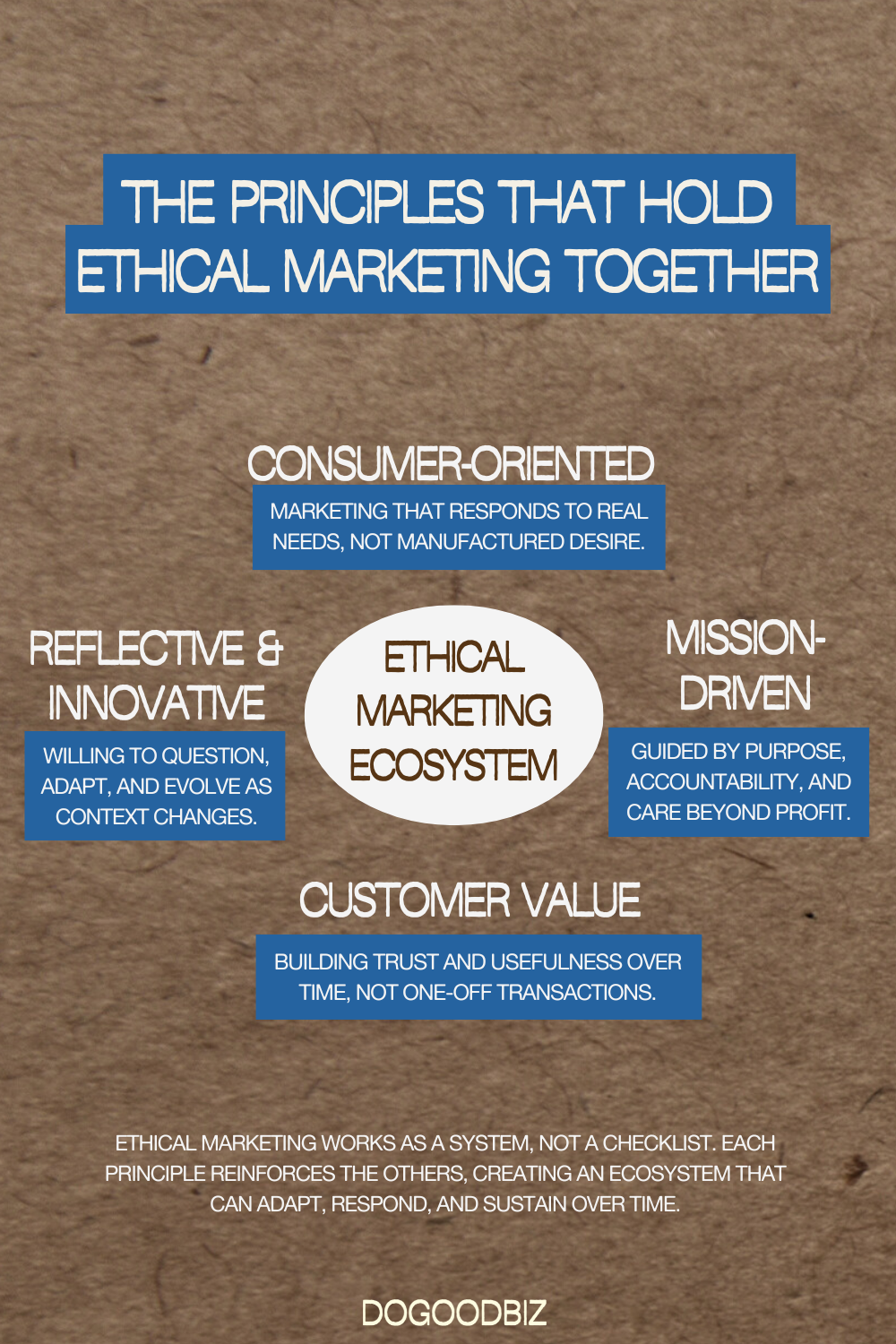
Ethical marketing isn’t one thing. It’s a set of interrelated practices that reinforce each other.
1. Consumer-Oriented MarketingMarketing that centers real needs, not manufactured desires.
This means listening deeply, responding thoughtfully, and designing offers that genuinely support people where they are, now and in the future.
2. Customer Value MarketingValue-first marketing prioritizes trust over transactions.
It focuses on:
long-term usefulness
consistency and reliability
improving offerings in response to real feedback
3. Innovative and Reflective MarketingEthical marketing evolves.
It requires:
ongoing learning and unlearning
adapting as social and cultural contexts shift
questioning “best practices” that no longer feel aligned
4. Mission-Driven MarketingYour values don’t live only on your About page.
Mission-driven marketing:
aligns messaging with real-world impact
makes your ethics visible through action
integrates purpose into everyday decisions
How to Build an Ethical Marketing Strategy
Ethical marketing is practiced through systems, not slogans. Here are foundational steps to begin…
Conduct Research with CareLearn who you’re serving without treating people as data points.
Ask what support actually looks like in their lives.
Develop Transparent PricingPrice with clarity and integrity.
Avoid hidden costs, artificial scarcity, or pressure-based sales.
Create Inclusive MessagingUse language and visuals that welcome rather than exclude.
Consider who your marketing speaks to — and who it leaves out.
Choose Sustainable PracticesFrom platforms to packaging, sustainability shows up in logistics.
Share what you’re learning openly, not performatively.
Map a Humane Customer JourneyDesign experiences that respect capacity, consent, and autonomy.
People should feel supported, not cornered.
Questions to Ask as an Ethical Marketer
Use these as ongoing reflections, not one-time audits:
Does this messaging reflect our actual values?
Are we inviting or pressuring?
Who benefits from this strategy — and who bears the cost?
Are we optimizing for speed, or for trust?
What kind of relationship are we building?
Ethical marketing is not about perfection. It’s about accountability and care.
How Ethical Marketing Supports Long-Term Growth
When marketing is rooted in ethics, the impact extends beyond numbers.
Trust deepens
Communities strengthen
Reputation compounds
Burnout decreases
Ethical marketing builds businesses that last because they are designed to sustain life, not consume it.
Where to Explore This Further
This post is part of our broader exploration of ethical, sustainable marketing ecosystems.
If this resonated, you might also explore:
Practicing Ethical Marketing Together
If you’re navigating how to align your marketing with your values (without burning out or selling out) we’re here.
At DoGoodBiz Studio, we collaborate with impact-driven businesses, creatives, and change-makers to build marketing ecosystems that are meaningful, sustainable, and deeply human.
Marketing can be a form of care. We believe it should be. If you resonated with this article and would like to learn more about ways we could support you, reach out here!
