

What Is an Analog Business? (And Why More Small Businesses Are Choosing to Stay Human)
I often wonder at what point we started equating "marketing" with "posting". I talk to small business owners and solopreneurs every single day, and it isn’t a rarity that I run into someone who thinks marketing = social media.
I understand how we adopted this very skewed understanding of marketing. Our society runs on a heavy dose of social media. It’s the place where a scary amount of humans get their daily “news”. As business owners, we all face the pressure to show up on these social platforms, every day, in every format. Reels. Carousels. Trends. And now, AI tools promising to help you make even more content, even faster.
But a growing (and exciting!) number of small business owners are starting to look for alternative approaches. They're building businesses that grow with people instead of through platforms.
In the studio, we call this an analog business.
What is an analog business?
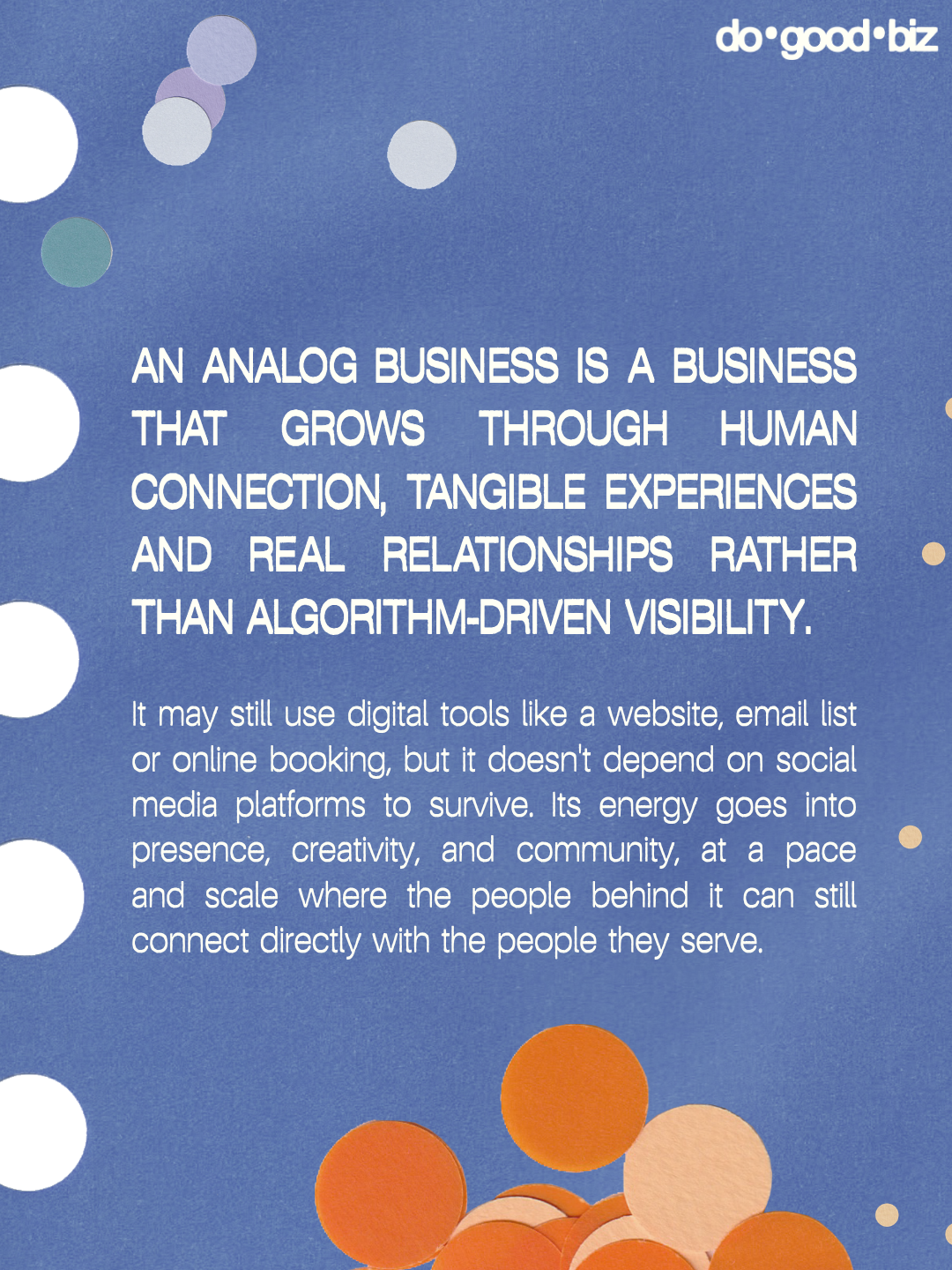
An analog business is a business that prioritizes human connection, tangible experiences, and real relationships over algorithm-driven growth. I was born in the mid-80s. I can still very clearly remember sitting on the floor of my bedroom creating mixtapes in my teens. When I got my license and first car in high school, I carried around several CD books filled to the brim with CDs I burned from a playlist I curated based on the bands I was obsessed with at the time. We used to write notes by hand and pass them around at school. I am notorious for creating really cool handmade gifts for holidays and birthdays. This, to me, is the essence of analog, and what I’ve always been attracted to is the fact that it requires more presence, thought, creativity, and imagination…while reducing dependency on modern-day tech that typically does the opposite. With the creation of the internet, we have quickly moved away from many analog practices, business included.
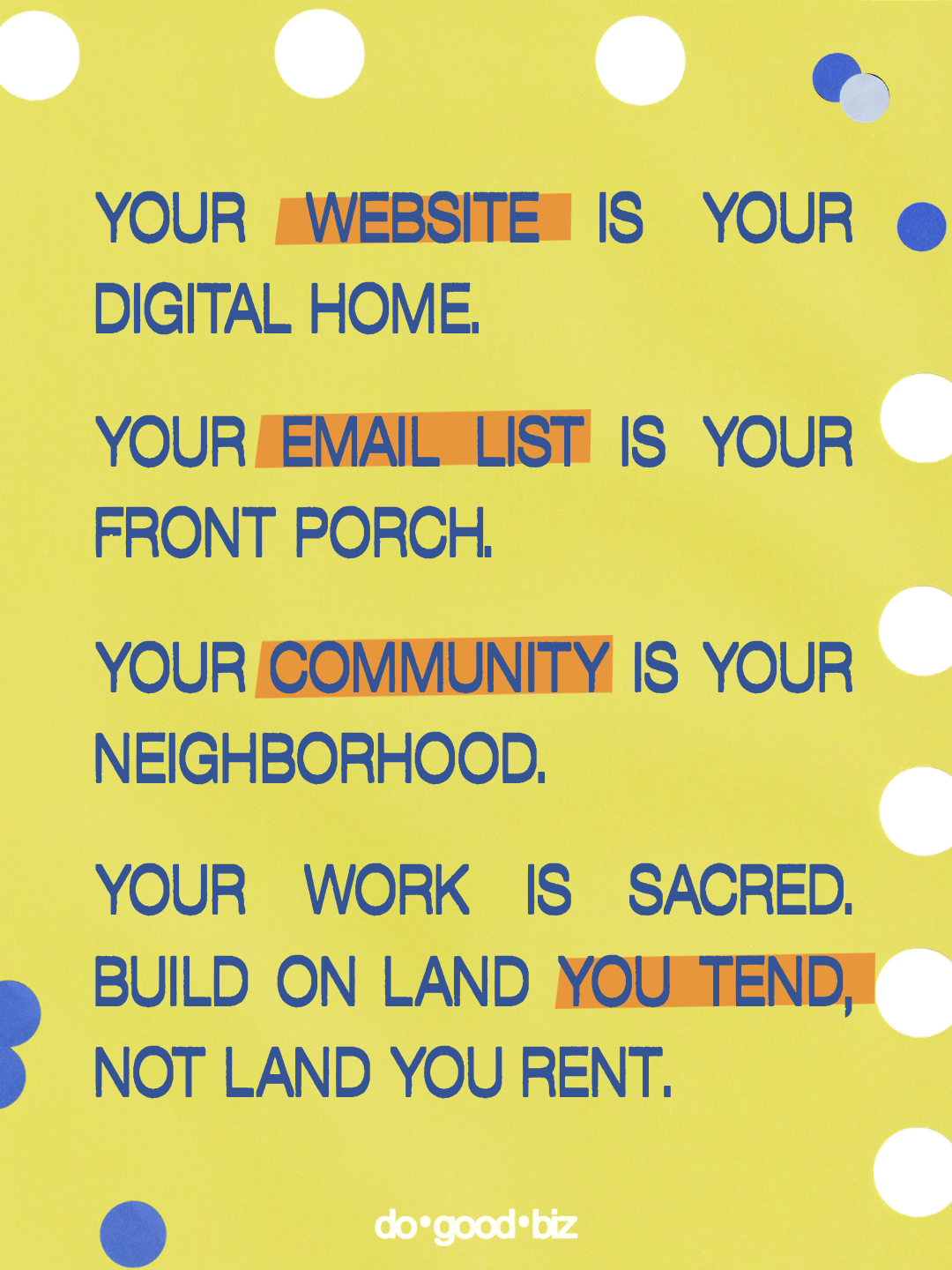
Going analog doesn't have to mean you throw away your laptop. Most analog businesses still have a website, an email list, and online booking. The difference is where the energy goes and where the trust gets built.
An analog business:
Grows through relationships, not algorithmic visibility. Referrals, community building, collaborations, and word of mouth do the heavy lifting.
Shows up in real places: markets, workshops, local events, community spaces, a table.
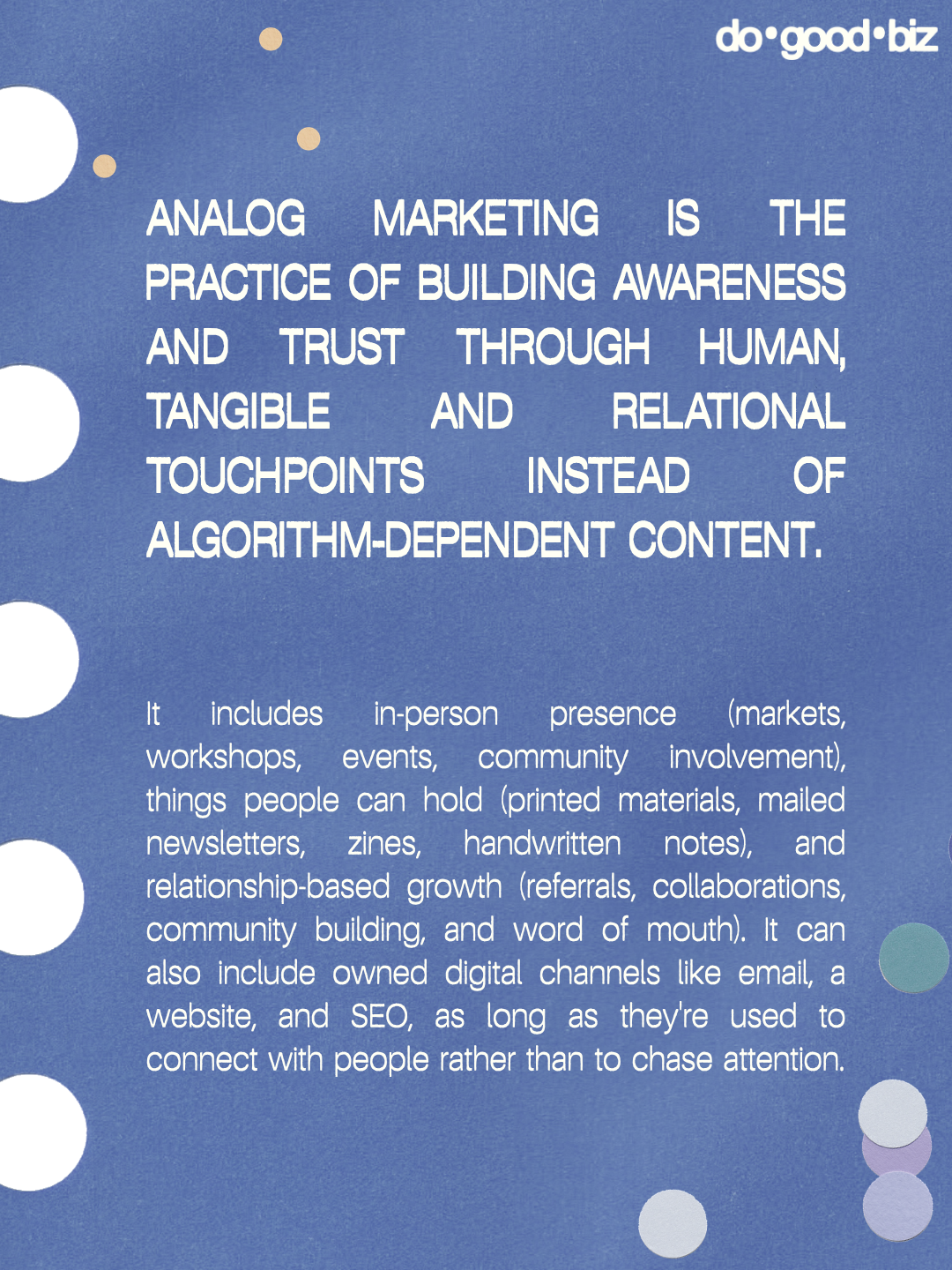
Makes things people can hold: printed materials, mailed newsletters, zines, handwritten notes, physical products.
Owns its channels: A website and an email list instead of rented space on platforms that change the rules overnight.
Moves at a human pace: It grows to a size where the owner can still connect with people directly.
Think of it less as a set of tactics and more as a stance: your business is something people experience, not something they consume mindlessly.
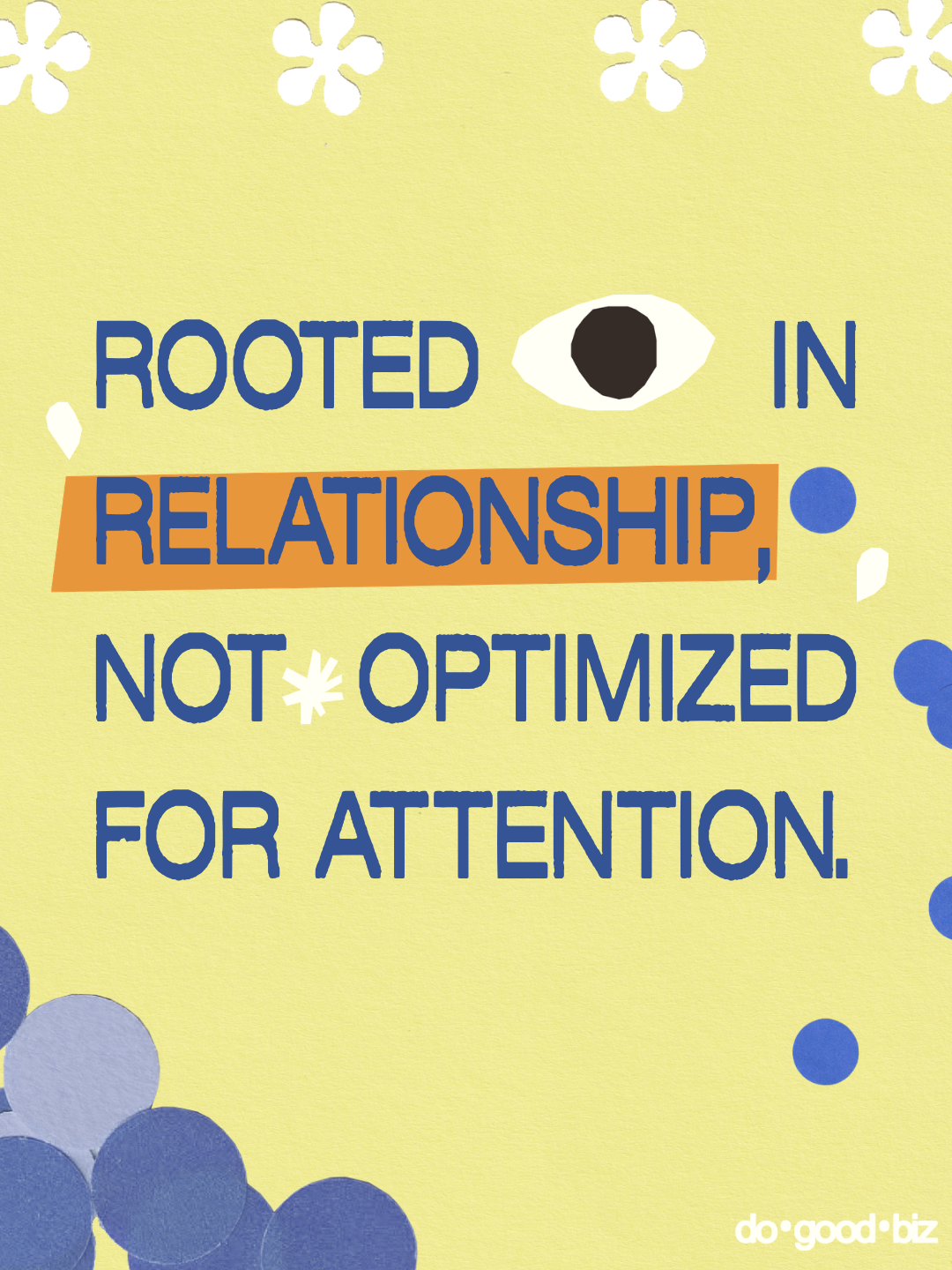
Analog is not the opposite of digital. It's the opposite of extractive. You can use digital tools in deeply human ways. A thoughtful email newsletter, a website that actually adds value as a resource, a podcast where you contribute to your community. What makes a business analog is that it's rooted in relationship, not optimized for attention. This may sound easy, and you may even be thinking, “I already approach business this way”. But at the end of the day, if we are really honest with ourselves, if we are depending on social media platforms to keep our business afloat, we are not taking an analog approach. That’s just the reality based on the ways in which social media platforms function.
There are many ways that I operate as an analog business in spite of being a heavily digital-based business. I make things by hand. I write things by hand. I prioritize intimate conversations. I avoid screaming into the void by depending on publishing on social media. I continue to connect with my in-real-life creative practice that is completely off screens and offline. I put a great deal of time, energy, and effort into getting out in my community and building relationships with people in person. I also take a very analog approach to marketing, which I speak more about here. There isn’t a one-size-fits-all approach to analog business that you have to follow. That’s part of the beauty of it-you get to make it your own!
There are many ways that I operate as an analog business in spite of being a heavily digital-based business.
I make things by hand. I write things by hand. I prioritize intimate conversations. I avoid screaming into the void by relying on publishing on social media. I continue to connect with my in-real-life creative practice that is completely off screens and offline. I put a great deal of time, energy, and effort into getting out in my community and building relationships with people in person. I also take a very analog approach to marketing, which I speak more about here. There isn’t a one-size-fits-all approach to analog business that you have to follow. That’s part of the beauty of it-you get to make it your own!
Why more small businesses are going analog
This isn't just about evoking nostalgia. It's a response to what the last decade of digital-first business has actually felt like.
People are tired of screens. A YouGov survey cited by the U.S. Chamber of Commerce found that 53% of Americans want to spend less time on screens. Among adults under 30, that number is 69% (U.S. Chamber of Commerce).
People are tired of content that feels clickbaity and AI-generated. The same report points to fatigue with low-quality, AI-generated content as one of the reasons physical, tactile experiences are standing out again.
Platforms are unreliable landlords. Algorithms change. Reach drops out of nowhere. Accounts get suspended. If your business depends on a platform, it’s important to remind yourself that you're building on rented land.
Small businesses don't actually need huge audiences. Most service-based businesses need a few dozen clients a year, not tens of thousands of followers. What they need is trust, and trust grows best through relationship tending.
I've seen this in my own studio. We have been deeply focusing on analog approaches to both business and marketing for over a year. I have seen as well as felt the positive effects of this approach… from cultivating new friendships and building bridges with organizations and movements I care a tremendous amount about to gaining a better sense of what it feels like to have a community you belong to and the value that can be experienced when we feel a genuine sense of belonging and connection with the people around us. Our studio has seen fantastic results by taking this approach, too, such as shifting how people find our studio to be driven largely by SEO, word of mouth, and community-building practices.
What does an analog business look like in practice?
Analog looks different for every business. Here are some of the ways small businesses are bringing it to life.
In-person presence
Tabling or volunteering at local markets, expos, and community events
Hosting workshops, open studios, or small gatherings
Partnering with other local businesses and organizations
Showing up consistently in the community spaces your people already are involved in
Attending local happenings that help you to get to know people
Contributing your time, knowledge, or resources to support community health and well-being
Tangible touchpoints
Printed postcards, business cards and flyers that people actually keep
Handwritten notes for clients, collaborators, or simply folks you meet + want to stay connected to
Snail mail newsletters or seasonal mailers
Zines, printed guides and small booklets
Stickers, prints, and small made objects
Relationship-based growth
Referral relationships with businesses and individuals you trust and have values alignment with
Introducing people who should know each other and being a connector within your community
Following up like a human, not a funnel
Building community connection spaces that aren't just audience-building or networking in disguise
Human-centered digital
A website that clearly answers what you do, who it's for and how to work with you
An email newsletter that sounds like a letter, not a sales sequence
SEO so the people already looking for you can find you
Podcasts, long-form writing or other formats that invite real conversation
Common myths about analog businesses
"Analog means anti-technology." It doesn't. It means technology that serves the relationship, not the other way around.
"You can't grow without social media." Plenty of businesses grew for generations through word of mouth, referrals and community presence. Many still do. Social media is one road. It was never the only one.
"Analog is slower, so it's less effective." Analog can be slower to start, sure. But relationships compound. A referral from someone who trusts you tends to arrive warmer, closer to ready, and more aligned than a stranger who saw one post.
"It's just a trend." The packaging might be trendy. The practice isn't. Small businesses have always been rooted in the people and places around them. Analog is a return, not an invention.
Is an analog business right for you?
Ask yourself:
How many clients or customers does your business actually need in a quarter? A year?
Where do your most aligned clients come from right now? (Actually track and check. Don't guess.)
Which marketing do you actually enjoy doing? What styles of marketing feel exciting to start testing out?
If you stopped posting on social media tomorrow, how would people still find you?
Where do your people already gather, online and off?
If your answers point to relationships, referrals, and real-life presence, you may already be running an analog business. You just haven't named it yet.
You also don't have to choose all or nothing. Many small businesses keep a light social presence while putting most of their energy into owned channels and in-person community. Analog is a direction, not a purity test.
How to start building a more analog business
Find out where your clients actually come from. Look at your inquiries from the past year. Referral? Search? An event? A friend of a friend? A keyword? A popular article or podcast episode you did?
Pick one room. One market, meetup, workshop or community space where your people already gather. Show up as a participant, not a vendor.
Make one thing people can hold. A postcard, a printed guide, a thank-you note.
Tend your owned channels. Make sure your website clearly explains what you do. Send your email list something worth opening.
Give before you ask. Introduce two people who should know each other. Share a resource. Refer a business you trust.
Building a human business, together
At DoGoodBiz Studio, this is the work we love most. We help community-rooted practitioners, small businesses, and movements become known and trusted in the communities they're built to serve.
Through our Community Building & Engagement work, we help businesses build the relationships, partnerships, outreach, and real-world presence that make analog growth possible.
Want to go deeper? I've put together a companion guide on my Substack, Field Notes, with real examples, templates, and DIY ideas for bringing analog practices into your business.
Curious what an analog approach could look like for your business? Let's talk.
Frequently asked questions
-
An analog business is one that grows primarily through human relationships, in-person presence, and tangible experiences rather than algorithm-driven social media marketing. It may still use digital tools like a website and email, but it centers trust and community over reach.
-
Analog marketing uses physical and in-person touchpoints to connect with people: printed materials, mail, events, workshops, partnerships, community building and word of mouth.
-
Yes! Many small businesses grow through referrals, local partnerships, SEO, email, and in-person community. The right mix depends on your business model and how many customers you actually need.
-
Nope. Analog businesses often use websites, email and online booking. The difference is that technology supports human relationships instead of replacing them.
