

How Long Does Content Actually Last? A Platform-by-Platform Guide
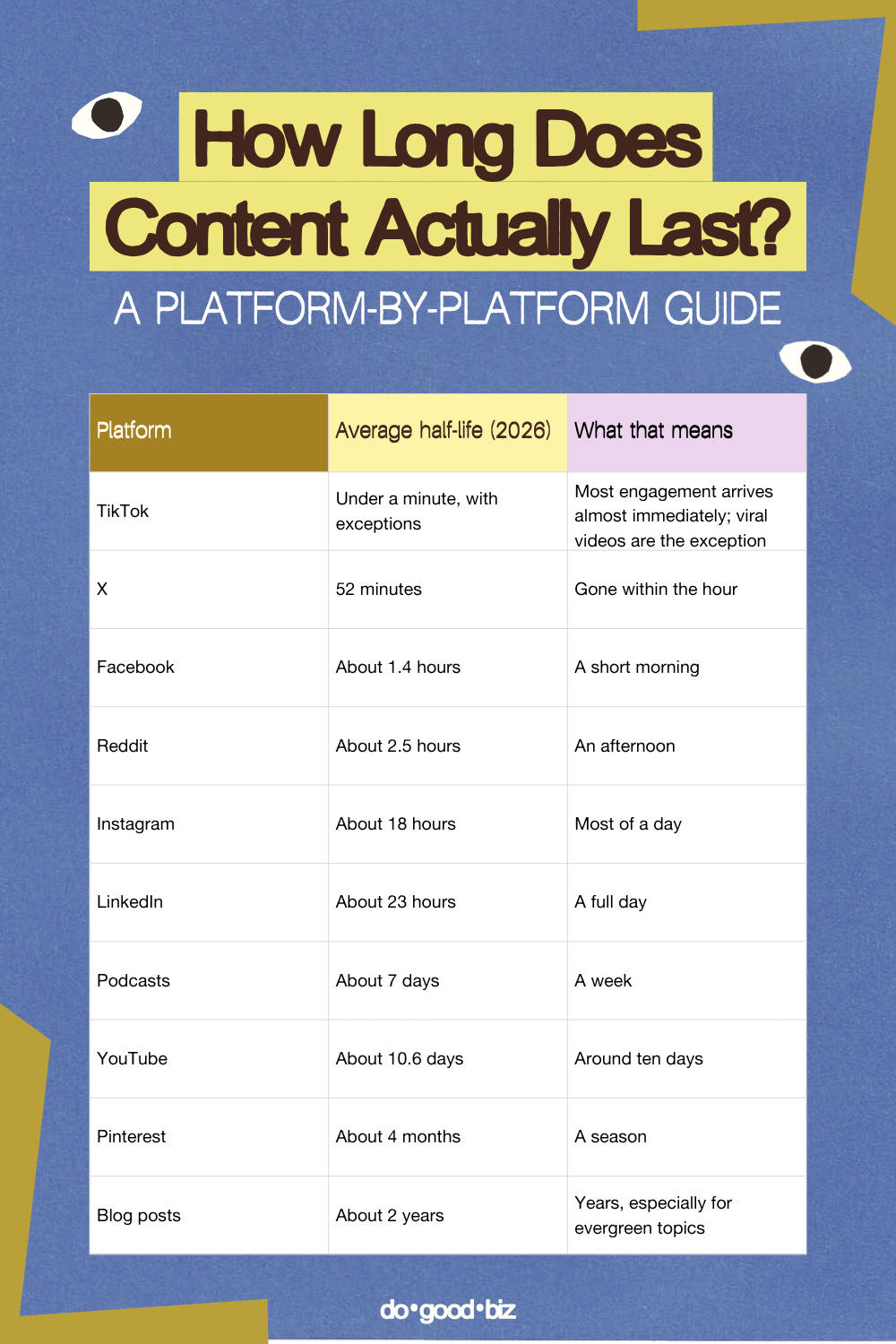
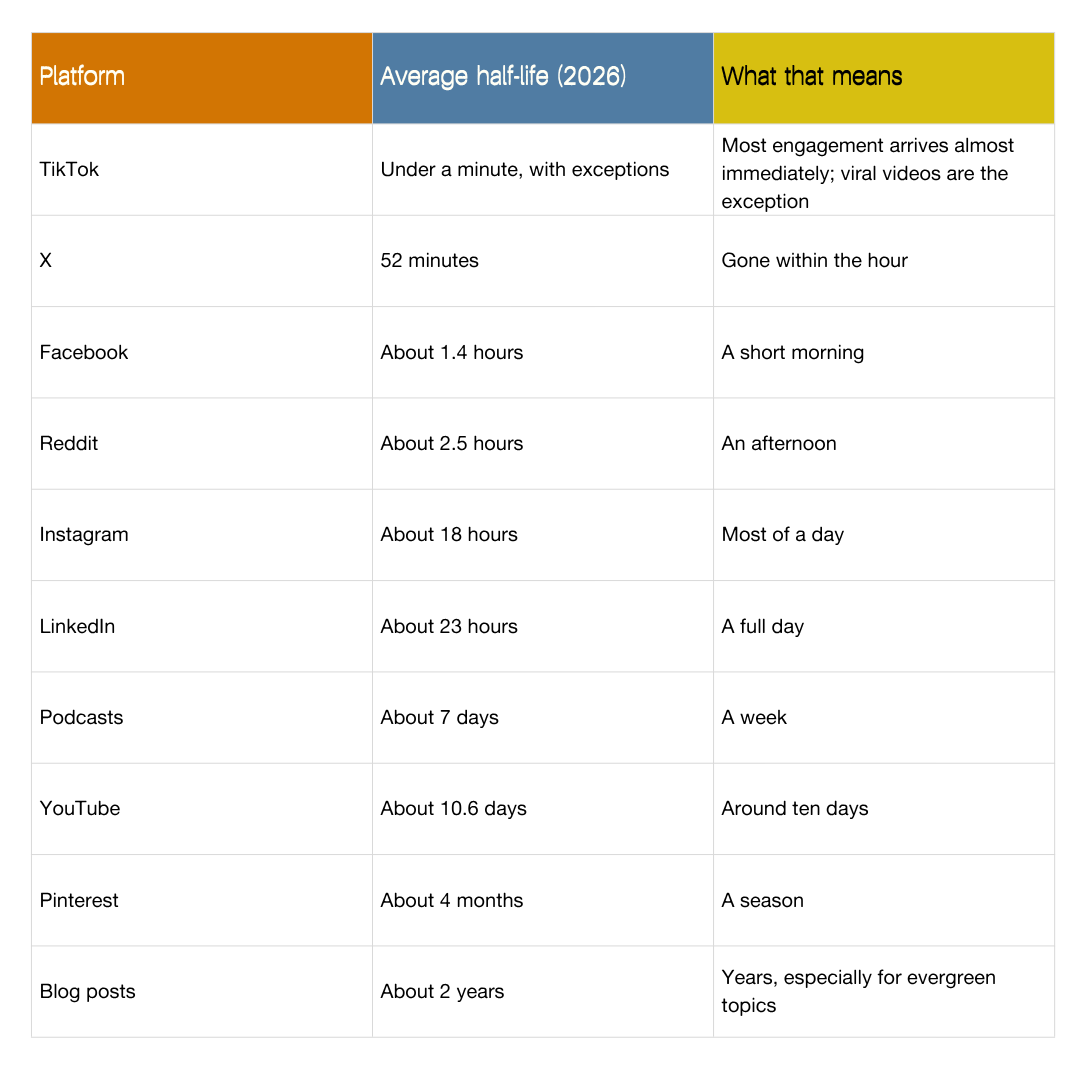
✱ Quick answer: Blog posts and Pinterest pins keep working the longest. In a widely cited 2026 study of how quickly posts collect engagement, blog posts took about two years to receive half of their total engagement and Pinterest pins about four months, compared with about a day on LinkedIn, 18 hours on Instagram, and under an hour and a half on Facebook. Search-based platforms outlast feeds because people find your content when they're looking for it, not only in the moment it's posted.
Understanding the Lifespan of Content
Whether it's a social media post or a blog article, every piece of content comes with its own lifespan, dictating how long it’s going to work for you. Understanding these lifespans is essential for crafting a sustainable content marketing strategy that works for you long after the initial publishing.
Content lifespans vary widely based on platform and format. Social media posts, for instance, tend to have short lifespans, with most engagement occurring within hours of posting. Video content offers a bit more staying power, particularly on platforms like YouTube, where videos can continue to attract views and engagement for months or even years post-publication. Yet blog content reigns supreme in longevity, sustaining traffic and engagement for two years or more.
Content lifespan by platform
Let’s take a look at the lifespans of various content types, including Instagram, TikTok, Facebook, blog posts, podcasts, and Pinterest. Understanding the lifespans of different content types is essential to developing a comprehensive content marketing strategy. By tailoring content to each platform and format's lifespan, brands can maximize reach and engagement over time.
These figures are "half-life": the time it takes a post to receive half of all the engagement it will ever get. Individual posts vary, and platforms change their algorithms often, so treat them as a guide to how each platform behaves, not a promise.
Annuals and perennials: why some content lasts
Think of feed posts as annuals: they bloom fast and are gone within a day or two. Search-based content, like blog posts, Pinterest pins, and YouTube videos people find by searching, behaves more like perennials. It takes longer to establish, but it comes back season after season without being replanted. A sustainable content strategy plants mostly perennials and uses annuals to point people toward them.
How to build content that keeps working
Plant perennials first. Make your blog, or another search-findable home, the center of your content, and write about questions your clients ask again and again.
Let annuals point home. Use feed posts to share a piece of something longer and send people to it, instead of making each post a standalone effort.
Repurpose instead of starting over. One article can become a newsletter, a few posts, and a pin. (Link: your repurposing guide.)
Refresh what's already working. Updating a strong older article often does more than writing a new one. Composting counts as content work.
Measure by lifespan, not likes. A post that brings someone to your site months later is doing more than one that peaks and disappears in an hour.
Want content that keeps working long after you publish it?
Our Content EcoOur Content Ecosystem & Search work builds a body of writing that compounds: a home for it, a structure people and search engines can find their way through, and a rhythm you can sustain.system & Search work builds a body of writing that compounds: a home for it, a structure people and search engines can find their way through, and a rhythm you can sustain.
See Content Ecosystem & Search
Until next time…
Natalie - DoGoodBiz Studio
Common Questions
-
Blog posts and Pinterest. In 2026 half-life data, blog posts took about two years to receive half their engagement and Pinterest pins about four months, far longer than any feed-based platform.
-
Instagram feed posts receive half their total engagement in about 18 hours on average. Stories disappear after 24 hours unless you save them to HighlightsInstagram feed posts receive half their total engagement in about 18 hours on average. Stories disappear after 24 hours unless you save them to Highlights.
-
It depends where it lives. On feeds, yes: most engagement arrives within a day. On search-based platforms like a blog, Pinterest, or YouTube, content can keep being found for months or years.
-
Refresh them with current information, link to them from newer posts, turn them into pins and newsletter pieces, and point your social posts back to them.
