

What Would Business Look Like If It Were Designed Like a Living System (Not a Machine)?
Care, boundaries, and collective responsibility in ethical business.
What would business look like if it were designed like a living system instead of a machine? This question has been sitting with me for a while. And lately, it’s been asking itself louder. Not from a polished, well-rested place. But from the middle of exhaustion.
Over the past year, I’ve been navigating intense perimenopause flare-ups. As a gender-queer, nonbinary person, this experience has been disorienting and deeply embodied in ways I wasn’t prepared for. Chronic insomnia. Bone-level fatigue. Nights when my body simply refuses rest, no matter how much I want it.
During one of those nights — nervous system fried, sleep nowhere in sight — I did what many of us do. I picked up my phone and started scrolling. Not because it was nourishing. But because it was there. Because when it’s 3 a.m., sometimes you’re just looking for something to tether to.
And somewhere in that scroll, something clicked.
Refusal Is a Form of Care
I realized that one of the ways small businesses, sole proprietors, and creatives can resist what’s happening right now, in the United States and globally, isn’t only through what we say. It’s through what we refuse to participate in. Through whom we choose not to work with. Who we decline to collaborate with. Who we stop lending our labor, creativity, and credibility to. That realization hit close to home.
There was a client project from last year that had been left incomplete. Recently, my studio manager, Emma, and I had been discussing whether we’d allow that individual to restart the project if they reached out again. After that conversation, I did a quiet check-in. I looked at their public platforms. And what I saw made the decision clear. This person was actively supporting individuals and ideologies that directly contribute to harm, violence, and dehumanization. Even through the fog of exhaustion, my answer was immediate. I will not align my work with people who support acts of hate or violence. Not now. Not ever. That decision wasn’t about punishment. It wasn’t about performative purity. It was about integrity.
My business is not neutral.
My labor is not neutral.
Who I work with is part of how I participate in the world.
Business Is a Living System, Not a Neutral Tool
That moment brought me right back to the original question:
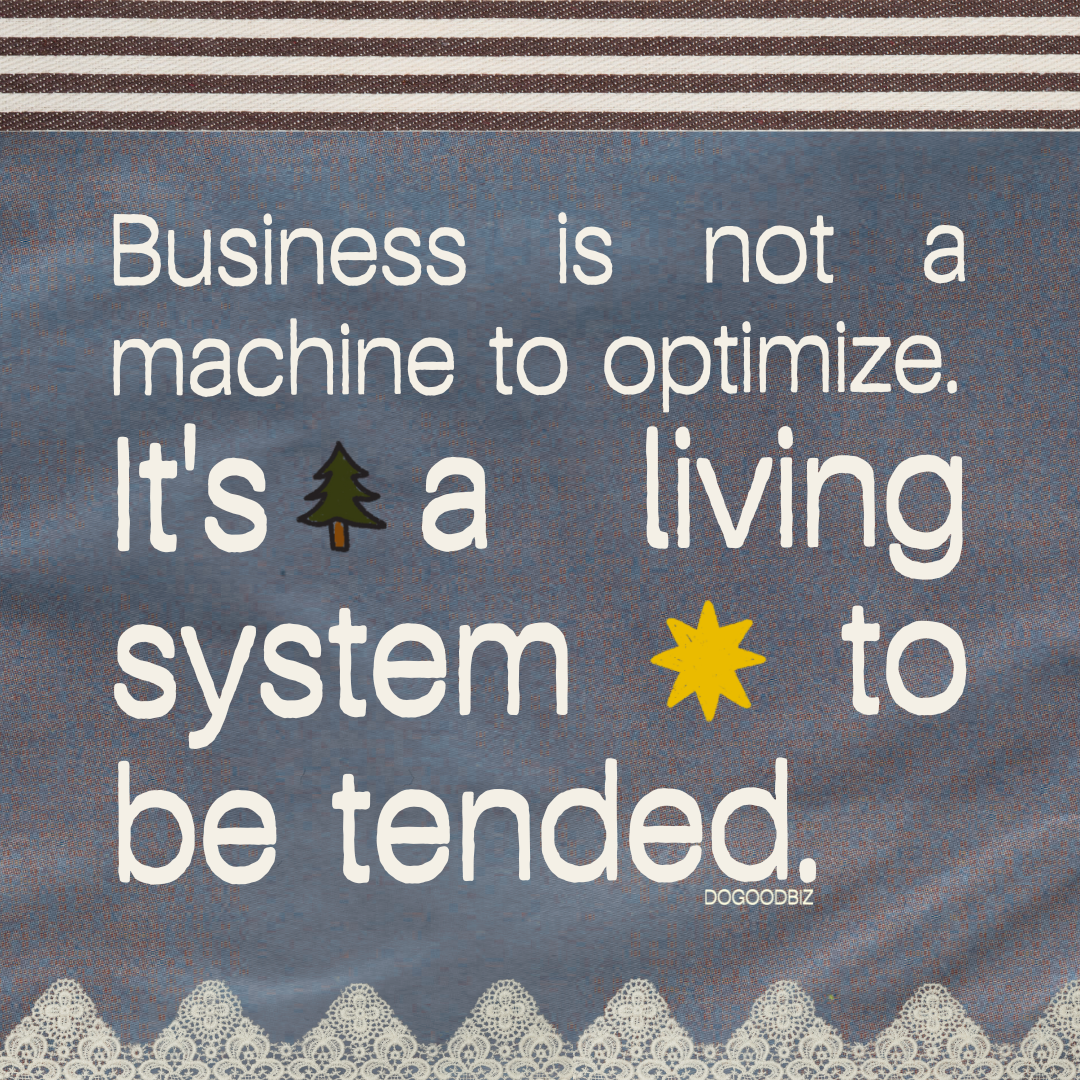
What would business look like if it were designed like a living system instead of a machine?
Because living systems have boundaries. They have discernment. They don’t give endlessly without regard for harm. They don’t support what poisons the whole just to keep one part profitable. This question feels especially urgent right now.
In moments when social contracts are dissolving.
In moments of environmental grief.
In moments where care is visibly lacking.
In moments where something is clearly not okay in the world.
What I’m Watching Happen to Creatives Right Now
Lately, I’ve been noticing a familiar pattern repeating:
Creatives going silent because they don’t know the “right” thing to say
People feeling they must stop marketing entirely because business feels inappropriate during crisis
Folks pouring every ounce of energy into responsiveness at the cost of their own health
Performative responses being rewarded while grounded ones disappear
Infighting and policing around who is “doing enough”
I want to be honest, I’ve spiraled here, too. I’ve burned myself out trying to respond to everything. I’ve reacted instead of responded. I’ve spoken before doing my homework. I’ve self-sacrificed and tried to be everything, everywhere, all at once. I’ve always woven justice and advocacy into my work — but not always from a regulated place.
Why Collapse Is Not a Personal Failure
In the fall and winter of 2020, I had to stop completely and rethink how I wanted to exist in business. That pause led me to rework my infrastructure, shift into a studio model, and step away from entire industries that no longer aligned with my values. Over time, that reckoning extended further. I’ve let go of clients. Said no to financial opportunities. Created distance, and sometimes no contact, in relationships that weren’t safe. This conversation goes far beyond business. But when we choose ethics, care, and collective wellbeing over capitalism and extraction, letting go is often part of the path. Choosing care can be costly. And I am always willing to pay it.
The Problem With Most Modern Business Systems
Most modern business models were not designed for human beings.
They weren’t designed for:
cyclical capacity
unique identities and lived experience
ecological limits
collective care
And yet creatives and small business owners are asked to carry all of it anyway.
We’re expected to:
generate ideas
manage systems
market publicly
handle conflict and safety
respond to crisis
and still rest
When one person is asked to do everything, collapse isn’t a failure, it’s inevitable. This is where ecological thinking becomes not just helpful, but necessary.
From Extraction to Ecology
If you look at nature, you’ll notice something important. No living system asks one element to do everything.
Forests survive because roles are shared:
some initiate growth
some sustain balance
some protect
some decompose
some regenerate
Roles shift over time. Energy redistributes during crisis. Rest is built in. Ecology doesn’t ask for constant output. It asks for right relationship.
Introducing the Ecological Roles of Care Framework
This is where my Ecological Roles of Care framework comes in. It’s informed by the Social Change Ecosystem Framework developed by Deepa Iyer, which emphasizes role diversity, shared responsibility, and long-term sustainability over hero narratives. My work translates this into a nature-based, care-centered framework for creatives and small businesses navigating burnout, ethics, and crisis. Rather than asking everyone to do everything, or nothing at all, this framework helps us understand how contribution actually works inside living systems. These roles already exist. I’m simply making them visible.
Because when we don’t understand our role, we tend to:
shrink and hide
or burn out trying to be everything
This framework is for people who already care, and want to stay whole while contributing meaningfully.
Why Identifying Your Role Changes Everything
When we understand our role, something shifts.
There’s relief.
Clarity.
Integrity.
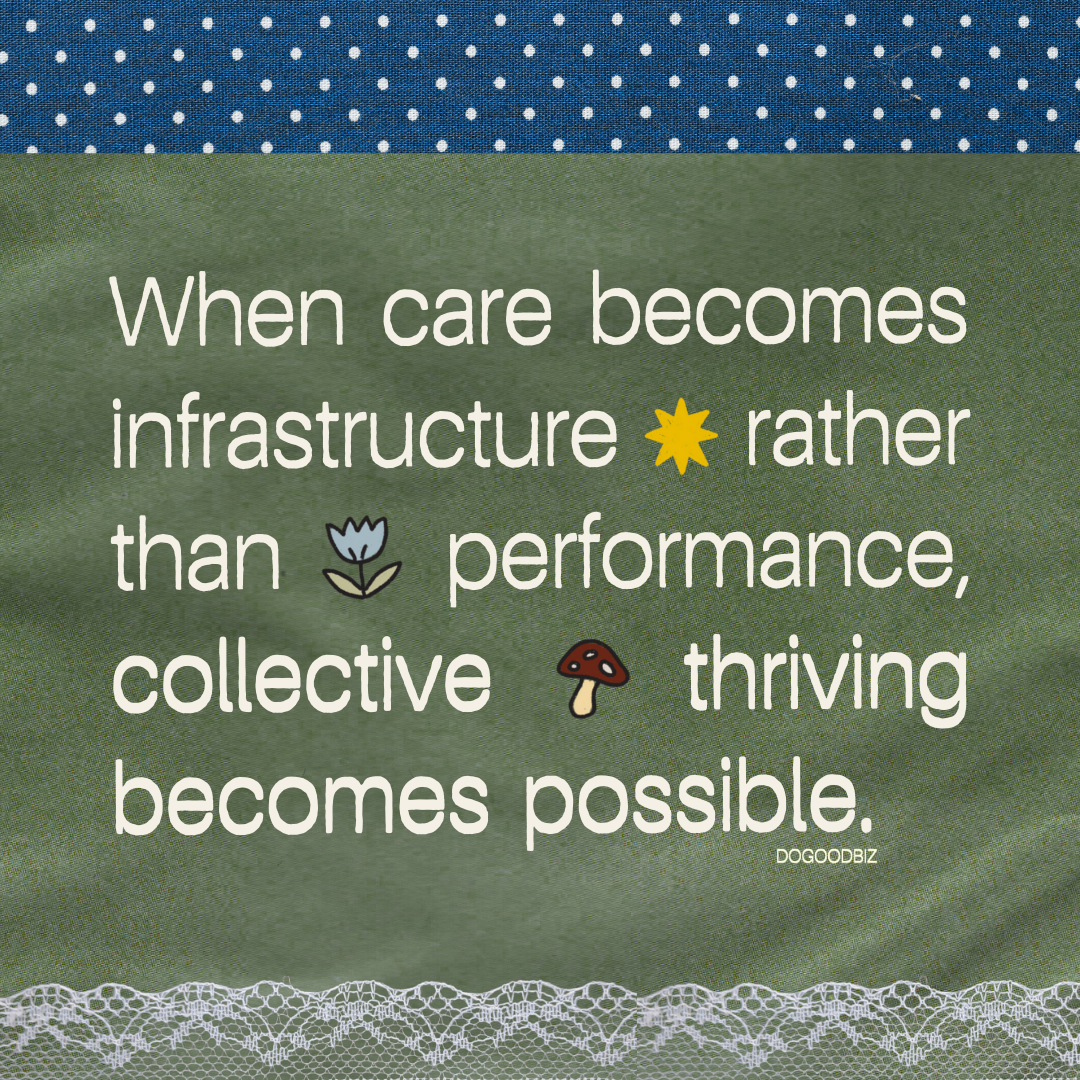
Care stops being a performance and becomes infrastructure. Because care isn’t just about surviving. It’s how collective thriving becomes possible.
Care as Infrastructure (Not a Vibe)
Sentimental care is language without structure. Infrastructural care is responsibility.
It looks like:
defined roles
boundaries
redistribution
rest cycles
repair
Care isn’t something we add on when convenient. Care is the work.
An Invitation, Not an Instruction
Instead of answers, I’ll leave you with questions:
How do you instinctively respond in moments of crisis?
What kind of care feels natural to you?
Where are you performing care instead of practicing it?
What would it look like to trust others to hold different roles?
You don’t need answers right away. Just notice what emerges.
And remember:
Ecosystems don’t ask for heroes.
They ask for participation.
Care was never meant to be carried alone.
It was meant to be shared.
Until next time…
Natalie Brite - DoGoodBiz Studio
